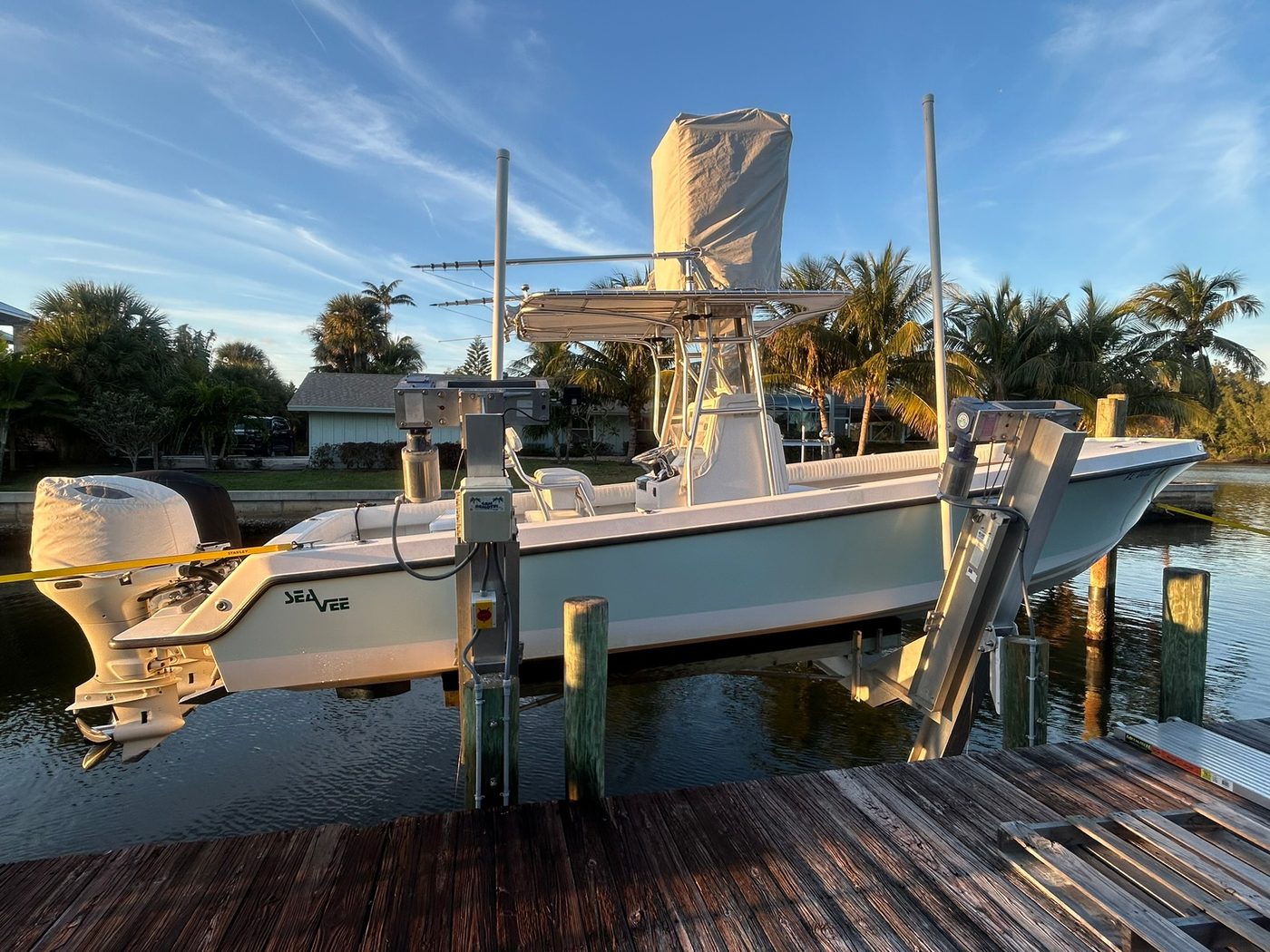
The market for used boat lifts has grown in recent years. New lift prices have climbed, waterfront homes change hands more frequently, and homeowners upgrading boats sometimes part with lifts that still have years of service left. For the right buyer with the right lift, used can be a smart purchase.
But "the right used lift" is harder to identify than most buyers assume. Saltwater is brutal to marine equipment, and damage often hides in places casual inspection misses. The buyer who sees a $3,000 used lift and thinks they're saving $20,000 over a new install is sometimes right and sometimes wrong by a wide margin.
This article walks through the 8-point inspection we recommend before signing anything on a used lift, plus the hidden costs that turn a great deal into a bad one.
When a used lift makes sense
Used purchases work best in specific scenarios:
- The lift is being sold because the owner is upgrading boats, not because the lift is failing. Ideally with documentation of the upgrade and a verifiable timeline.
- The lift is less than 8–10 years old and was installed in similar saltwater conditions to where you'll be using it.
- The brand is still in business and parts remain available through authorized dealers.
- You have access to the original install documentation — permit records, capacity rating, manufacturer paperwork.
- The lift is being sold in place (you're buying a property with the lift on it) rather than relocated. Relocated lifts have additional risk we'll cover below.
When a used lift is a trap
Used purchases turn into expensive mistakes when:
- The lift is over 15 years old in saltwater. By that age, internal corrosion is often more advanced than visible inspection reveals.
- The brand is out of business or no longer supported. Replacement parts become custom fabrication jobs at custom fabrication prices.
- The lift is being removed and relocated. This adds removal cost, transportation, re-installation, and almost always re-engineering of the structural attachment.
- There's no documentation of the original capacity rating or installation history.
- The seller is in a rush and won't allow inspection.
The pattern in most used-lift failures: the buyer focused on the lift itself and ignored the installation and support context.
The 8-point inspection
Before signing on a used lift, work through these eight checks. Some require getting hands on the equipment; others can be done remotely with the right photos and documents.
1. Frame and structural corrosion
Aluminum boat lift frames develop two kinds of corrosion in saltwater: galvanic (where dissimilar metals contact) and oxidative (where bare aluminum oxidizes). Surface oxidation is usually cosmetic. Pitting corrosion — small holes or craters in the aluminum — is structural and reduces load-bearing capacity.
What to inspect:
- Top beams along their entire length — particularly where stainless steel hardware contacts the aluminum (a common galvanic corrosion site)
- Cradle support beams, especially near the water line where wet/dry cycling accelerates corrosion
- Cross-bracing and brackets
- The interior of hollow extrusions — sometimes hidden but accessible through end caps
Deal-breaker: pitting that goes deep enough to see through, or extensive corrosion across multiple structural members.
2. Cable condition
If the lift uses cables (most do), they are the consumable component most likely to fail first. Cables are expected to be replaced every 2–4 years in saltwater, regardless of visible condition.
What to inspect:
- Visible fraying — even a single broken strand is a replacement signal
- Corrosion at the winch and at any tight bends
- Kinks or flat spots from prior mishandling
- Burrs along the length (run a gloved hand carefully)
- Drum winding pattern — should be smooth and even, not crossed over itself
Worn cables aren't necessarily a deal-breaker — they're a known cost ($500–$1,500 to replace, depending on the lift). Build that into the price you offer.
3. Pulleys and sheaves
Pulleys carry every pound of load that goes up and down on the lift. Worn or seized pulleys destroy cables on the next operating cycle.
What to inspect:
- Free rotation of every pulley (turn each one by hand if possible)
- Wear grooves cut into the pulley face — visible damage indicates cable abrasion that will continue
- Marine debris (seaweed, barnacles) packed around the pulley body
- Bearing play — pulleys should rotate freely but not wobble side to side
Deal-breaker: multiple seized pulleys, or pulleys with deep wear grooves.
4. Drive motor and electrical
Boat lift motors run in one of the harshest environments any electric motor faces — salt spray, humidity, and frequent unattended use. Inspecting them properly requires both visual and operational checks.
What to inspect:
- Motor housing — sealed motors should show no signs of water intrusion. Open-frame motors should be free of corrosion on internal components.
- Wiring — corroded terminals, brittle insulation, or evidence of jury-rigged repairs
- GFCI protection on the supply circuit (required for any new install — if it's missing, factor in the cost of adding it)
- Dockside disconnect — should be present, weatherproof, and functional
- Operating test — does the lift run smoothly through a full cycle? Any unusual sounds, hesitation, or load drops?
Deal-breaker: motors with internal water damage, or electrical systems that don't meet current marine electrical code.
5. Pilings and structural attachment
This is the inspection most buyers skip, and it's the one that causes the most expensive problems later. The lift itself can be in perfect condition, but if the pilings it's mounted to are deteriorated, the whole installation is on borrowed time.
What to inspect:
- Piling condition at the water line — concrete pilings can spall and expose rebar; wood pilings can rot or be eaten by marine borers
- Piling height — must accommodate current and future water level extremes
- Connection hardware between lift and pilings — stainless steel preferred, with no galvanic corrosion at the junctions
- Piling movement — pilings should not move when pressure is applied
Critical note: if you're buying a used lift to install on pilings you'll be driving fresh, this section doesn't apply to the lift itself. But it does apply to whether your existing dock can handle the lift. We'll cover that below.
6. Capacity documentation
Every boat lift has a rated capacity that determines how much weight it can safely hold. This rating is printed on a manufacturer plate somewhere on the lift — usually on the top beam or motor housing — and should match the manufacturer's documentation.
What to verify:
- The capacity rating plate exists and is legible
- The rating matches the lift configuration (some lifts can be re-rated lower if components are downgraded)
- The original installation permit (if available) shows the lift was permitted at this capacity
- The capacity covers your loaded boat weight with the standard 20% safety margin
Deal-breaker: no visible rating plate. You don't know what you're buying.
7. Manufacturer support and parts availability
A lift from a manufacturer that's still in business and well-supported is a different purchase from a lift made by a company that went out of business 12 years ago.
What to confirm:
- The manufacturer is still operating
- Parts for this specific model are still available — call the manufacturer directly to verify, don't take the seller's word
- There's an authorized dealer or service network in your area
- Common wear parts (cables, pulleys, motors, hardware) are stock items, not custom orders
This single check separates good used lifts from money pits. A 10-year-old lift from a major brand with full parts support is a legitimate purchase. A 10-year-old lift from a defunct manufacturer is a slow-motion problem.
8. Warranty and transferability
Most manufacturer warranties are non-transferable — meaning if the original owner sells the lift, the warranty doesn't follow. This is industry standard, not a surprise. But it does mean you're buying a lift with no manufacturer protection.
What to confirm:
- Whether the manufacturer offers any inspection-based warranty option for resold lifts (rare, but a few do)
- What the original install date was — affects remaining structural life expectancy
- Whether the seller can document the maintenance history
The hidden costs of a "$3,000 used lift"
The sticker price on a used lift is almost never the actual cost. To do an honest comparison against a new install, factor in:
- Removal from current location (if not buying in place) — typically requires a contractor with marine equipment
- Transportation — boat lifts are awkward, heavy loads. Specialized transport.
- Re-installation at your property — includes piling work, electrical, attachment, alignment
- New permit at your property — relocating a used lift requires a new marine construction permit, drawings, and engineering review
- Replacement consumables — cables, anodes, sometimes pulleys. Assume you're replacing at least some of these.
- Electrical upgrades if the existing dockside service doesn't meet current code
- No manufacturer warranty — any failures in the next 5–10 years come out of your pocket
The honest accounting for many used-lift purchases ends up at 60–80% of new-install cost — with significantly higher residual risk. The deal makes sense in some specific scenarios. It doesn't in others.
Three deal-breakers — see any one of these, walk
- Visible structural pitting on multiple frame members. Aluminum doesn't grow back. Pitting means reduced capacity, and the lift may not safely hold its rated load.
- No capacity rating plate or original documentation. You don't know what you're buying. Don't gamble.
- Manufacturer out of business with no parts network. The lift will work until it doesn't, and then it becomes scrap.
Any one of these is enough reason to walk. Two or more makes the decision easy.
Bottom line
Used boat lifts can be smart purchases when the lift is recent, the manufacturer is supported, the documentation is intact, and the structural condition holds up to inspection. When any of those are missing, the "savings" usually evaporate by year three.
If you're considering a used lift purchase and want a second opinion before committing, we offer paid pre-purchase inspections on used lifts across Palm Beach and Broward County. The inspection cost is small relative to the cost of buying wrong. Request an inspection or call 754-SEA-WALL.
Or, if the used-lift math doesn't work out, we can quote you a new install across the five brands we carry and you can make a clean comparison.
Frequently asked questions
Is buying a used boat lift a good idea?
Sometimes. Used lifts are smart purchases when the lift is less than 8 to 10 years old, the manufacturer is still in business and supported, the structural condition holds up to inspection, and you have documentation of the capacity rating and install history. When any of those are missing, the savings often evaporate.
How long does a boat lift last in saltwater?
A well-maintained boat lift in Florida saltwater typically lasts 15 to 20 years before major components need replacement or the structure needs significant rehabilitation. Cables need replacement every 2 to 4 years regardless of overall lift age.
What should I look for when inspecting a used boat lift?
Eight key areas: frame and structural corrosion, cable condition, pulleys and sheaves, drive motor and electrical, pilings and structural attachment, capacity documentation, manufacturer support and parts availability, and warranty transferability. Pitting corrosion in the aluminum frame is the most common deal-breaker.
How often should boat lift cables be replaced?
Every 2 to 4 years in saltwater regardless of visible condition. Cables are the consumable component most likely to fail first. Saltwater accelerates corrosion both externally and within the cable strands.
Does the warranty transfer when I buy a used boat lift?
Usually not. Most manufacturer warranties on boat lifts are non-transferable, meaning when the original owner sells the lift the warranty doesn't follow. This is industry standard. A few manufacturers offer inspection-based warranty options for resold lifts, but it's rare.
What is the hidden cost of buying a used boat lift?
Beyond the sticker price, factor in: removal from current location, transportation, re-installation at your property, new marine construction permit, replacement of consumables like cables and anodes, possible electrical code upgrades, and the absence of manufacturer warranty. Total cost often reaches 60 to 80 percent of new install cost with higher residual risk.